Redfearn Farm CSA now Serving Overland Park, Lee’s Summit, Blue Springs and Independence!

Our 6th growing season serving Independence, Blue Springs, Lee’s Summit and Kansas City is well under way and now we are adding Overland Park to the mix!

Redfearn Farmers Lee's Summit CSAWith the addition of the Overland Park Farmer’s market this year, and great customer demand there, we are excited to add a CSA pick up location at the OP Farmer’s Market!

Much of our fields are already planted and our greenhouses are full of transplants ready to go out in the field.  Despite the cold spring we are on track to start our extended CSA program on April 30.  If you want to eat local and eat healthy, joining Where the Redfearn Grows Natural Farms CSA Membership Plan is the perfect way to boost your intake of healthy foods sustainably grown by your neighborhood farmers.  The CSA is a membership plan that allows you to share in the produce from our Independence, MO family farm.  In effect, by joining the CSA you are joining into a very large home-grown organic vegetable garden–A garden managed without the use of harmful chemical pesticides or herbicides, and one that requires far less of your time and yields far more variety than if you were to put in your own garden.  We offer two different membership levels to meet the needs of your household.   The Basic Share  includes 5 different types of vegetables or 20-25 servings per week.   The Premium Share includes 8 different vegetables or 32 – 40 servings per week.

So why join our CSA program?

  • When you join our CSA you’ll receive a steady stream of fresh vegetables for 20 weeks
  • Freedom to Choose. Where the Redfearn Grows Natural Farms CSA allows you to customize the contents of your box.  Unlike most Kansas City CSA’s, we have a market style CSA.  Each week you choose the contents of your box from the wide variety of available crops.  Read more here about how our CSA works.
  • Seasonal Eating. CSA members truly eat with the seasons, enjoying fresh leafy greens throughout the summer, tomatoes in July, and hearty roots and sturdy greens in the fall. Our seasonal produce is picked at the height of freshness, yielding the highest nutritional content.
  • Fresh, fresh, fresh. When you join our CSA your vegetables will come from the field to your table within a couple days, allowing you to serve your family the freshest food possible.
  • Meal Planning. CSA vegetables provide a healthy base for weekly meal planning. With every CSA Share we include meal ideas, recipes, and general prep and storage tips. Eating healthy becomes easy and routine. Click Here to view a sample weekly email.
  • Exposure to new foods. We grow a lot of crops that are familiar to most people.  Most weeks you’ll have the option to choose an item or two that might be new to you, try them right along with your favorite foods. This is also a great way to get kids trying new foods from the start, make trying new foods a fun and regular occurrence!
  • Connection to your Food and Farmers.  You’ll get a chance to meet your farmers and understand what went into the food on your table.  You’ll be seeing us each week when you pick up your shares at the farm, the Lee’s Summit Farmer’s Market or the Overland Park Farmer’s Market.  Members love bringing kids to feed the chickens and enjoy the outdoors.  If you like getting your hands dirty and want to save some money, you can also get a discount by signing up for work shifts to help us harvest a few times throughout the season.
  • Options for other great farm produce.  We provide free range eggs and honey from our farm for sale.  We also have our own farm raised hormone free pork and grass fed beef for sale at the farm.  If you pick up at the farm we often have some blemished produce available for free to CSA members.
  • Our farm serves a large area of Kansas City.  We have pick up locations at the Independence farm as well as at the Overland Park Farmer’s Market and the Lee’s Summit Farmer’s Market.
  • Our CSA shares break down to a very low cost per week.  Members boxes include more than the retail value each week, giving our members access to fresh, healthy food at a reduced price.  Sign up now and save!
  • You’ll be doing your part to support local, environmentally-responsible agriculture!

Click Here to check out your CSA membership options.  Shares are limited!

Where the Redfearn Grows Natural Farms was founded with the belief that natural ecosystems hold within them the keys to growing healthy food. We believe in cooperation with nature rather than the subjugation of it. We bring ancient organic agricultural wisdom and modern biological research together to develop growing practices for our community supported agriculture program (CSA) that mimic naturally-occurring processes.  The result is healthier food and a healthier environment. For all produce grown for our Kansas City area community supported agriculture program we reject the use of: chemical pesticides, herbicides, fertilizers or GMO seeds. We aim to protect biodiversity, build organic matter in the soil, prevent pollution, reduce waste, and conserve resources on our Independence Missouri farm. The health of our family, our customers and our environment is of critical importance to us. That is why preserving natural practices in growing the produce we provide to our Kansas City area CSA members is part of who we are.

Questions about joining our CSA? Call us – 816-457-1223 or email us at sheri@redfearnfarm.com.

CSA 2016 wk 14 Independence, MO

Your Customized box of Farm Fresh Produce is only Weeks Away!

We are busily preparing for our 6th growing season serving Independence, Blue Springs, Lee’s Summit and Kansas City!

Redfearn Farmers Lee's Summit CSASome of our field are already planted and our greenhouses are full of transplants ready to go out in the field.  Despite the cold spring we are on track to start our extended CSA program on April 30.  If you want to eat local and eat healthy, joining Where the Redfearn Grows Natural Farms CSA Membership Plan is the perfect way to boost your intake of healthy foods sustainably grown by your neighborhood farmers.  The CSA is a membership plan that allows you to share in the produce from our Independence, MO family farm.  In effect, by joining the CSA you are joining into a very large home-grown organic vegetable garden–A garden managed without the use of harmful chemical pesticides or herbicides, and one that requires far less of your time and yields far more variety than if you were to put in your own garden.  We offer two different membership levels to meet the needs of your household.   The Basic Share  includes 5 different types of vegetables or 20-25 servings per week.   The Premium Share includes 8 different vegetables or 32 – 40 servings per week.

So why join our CSA program?

  • When you join our CSA you’ll receive a steady stream of fresh vegetables for 20 weeks
  • Freedom to Choose. Where the Redfearn Grows Natural Farms CSA allows you to customize the contents of your box.  Unlike most Kansas City CSA’s, we have a market style CSA.  Each week you choose the contents of your box from the wide variety of available crops.  Read more here about how our CSA works.
  • Seasonal Eating. CSA members truly eat with the seasons, enjoying fresh leafy greens throughout the summer, tomatoes in July, and hearty roots and sturdy greens in the fall. Our seasonal produce is picked at the height of freshness, yielding the highest nutritional content.
  • Fresh, fresh, fresh. When you join our CSA your vegetables will come from the field to your table within a couple days, allowing you to serve your family the freshest food possible.
  • Meal Planning. CSA vegetables provide a healthy base for weekly meal planning. With every CSA Share we include meal ideas, recipes, and general prep and storage tips. Eating healthy becomes easy and routine. Click Here to view a sample weekly email.
  • Exposure to new foods. We grow a lot of crops that are familiar to most people.  Most weeks you’ll have the option to choose an item or two that might be new to you, try them right along with your favorite foods. This is also a great way to get kids trying new foods from the start, make trying new foods a fun and regular occurrence!
  • Connection to your Food and Farmers.  You’ll get a chance to meet your farmers and understand what went into the food on your table.  You’ll be seeing us each week when you pick up your shares either at the farm or the Lee’s Summit Farmer’s Market.  Members love bringing kids to feed the chickens and enjoy the outdoors.  If you like getting your hands dirty and want to save some money, you can also get a discount by signing up for work shifts to help us harvest a few times throughout the season.
  • Options for other great farm produce.  We provide free range eggs and honey from our farm for sale.  We also have our own farm raised hormone free pork and grass fed beef for sale at the farm.  If you pick up at the farm we often have some blemished produce available for free to CSA members.
  • Our farm serves a large area of Eastern Kansas City.  We have pick up locations at the Independence farm as well as at the Lee’s Summit Farmer’s Market.
  • Our CSA shares break down to a very low cost per week.  Members boxes include more than the retail value each week, giving our members access to fresh, healthy food at a reduced price.  Sign up now and save!
  • You’ll be doing your part to support local, environmentally-responsible agriculture!

Click Here to check out your CSA membership options.  Shares are limited!

Where the Redfearn Grows Natural Farms was founded with the belief that natural ecosystems hold within them the keys to growing healthy food. We believe in cooperation with nature rather than the subjugation of it. We bring ancient organic agricultural wisdom and modern biological research together to develop growing practices for our community supported agriculture program (CSA) that mimic naturally-occurring processes.  The result is healthier food and a healthier environment. For all produce grown for our Kansas City area community supported agriculture program we reject the use of: chemical pesticides, herbicides, fertilizers or GMO seeds. We aim to protect biodiversity, build organic matter in the soil, prevent pollution, reduce waste, and conserve resources on our Independence Missouri farm. The health of our family, our customers and our environment is of critical importance to us. That is why preserving natural practices in growing the produce we provide to our Kansas City area CSA members is part of who we are.

Questions about joining our CSA? Call us – 816-457-1223 or email us at sheri@redfearnfarm.com.

CSA 2016 wk 14 Independence, MO

10 Healthiest Vegetables in your Locally Grown CSA Box.

Chances are you are missing out on some of the incredible health benefits of vegetables.  A recent CDC study reveals that 86% of Americans are not eating enough vegetables!  Do you eat the recommended 3 servings of vegetables per day?  If you live in the Kansas City area Where the Redfearn Grows Natural Farms can help you develop healthier eating habits and have fun doing it!  Our unique CSA program allows you to choose from our delicious home-grown produce to customize a box to fit your needs each week.  We grow an amazing selection of vitamin-packed produce on our farm in Independence, MO; and we grow them the old fashioned way all without the use of harmful chemical pesticides or herbicides.  Availability of items changes with the seasons, but the freshness and quality of what we offer remains the same.  Our CSA members will tell you that, joining our CSA program has radically improved their diet.  In fact that’s our motto: “Together we’ll change the way you eat!”

Each week, we provide recipes and tips to help unlock the hidden flavors and nutrition from the crops we grow.  The freshness of the real food we provide has made vegetable lovers out of many sworn vegetable haters.  One member told us she hated carrots for the first 60 years of her life until she tasted ours.  Now she chooses them almost every week!

So what are you waiting for?  We have customizable membership levels that will fit your needs and budget.  Check out our CSA options here.

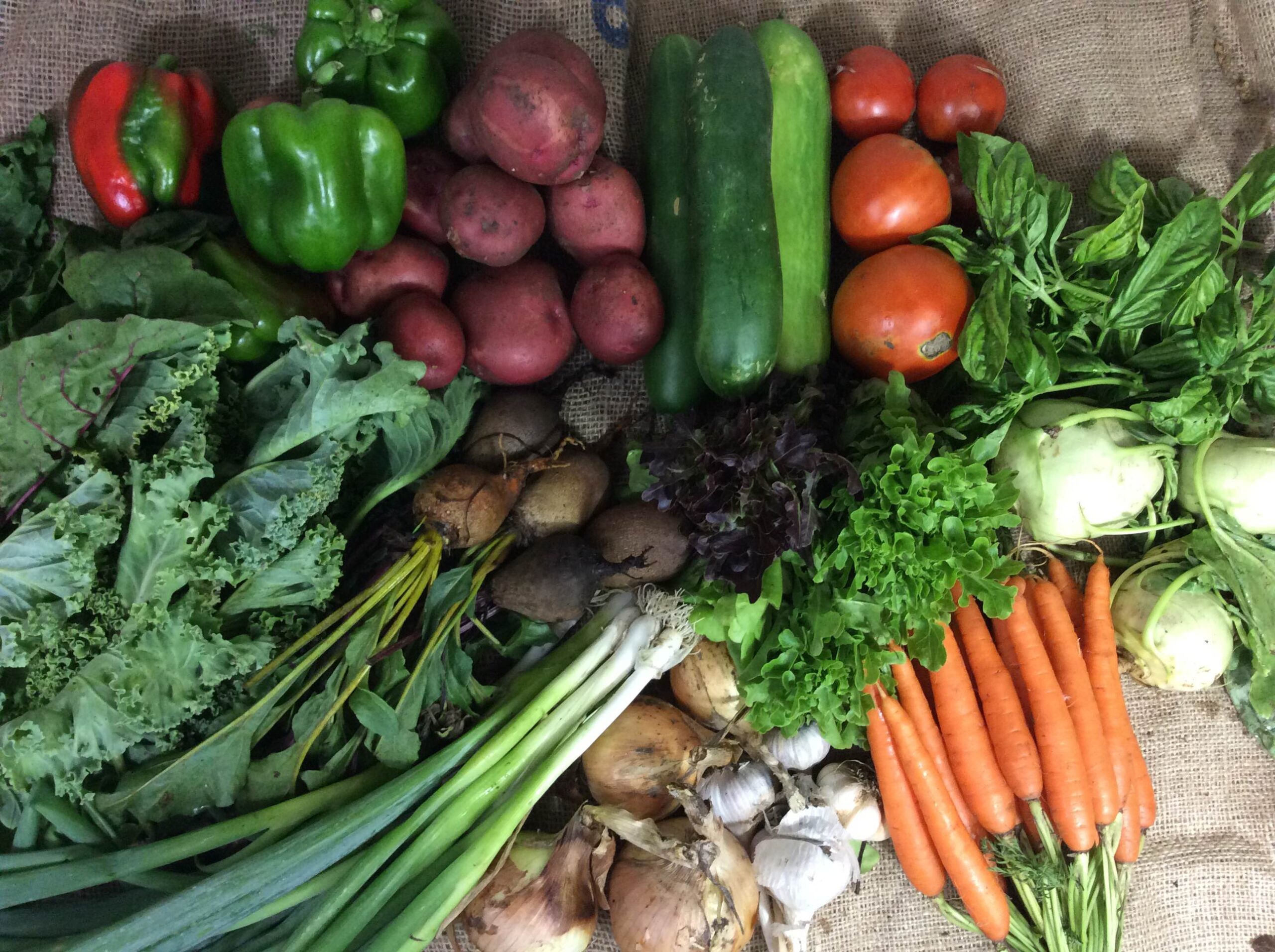
So you know vegetables are good for you and we grow just about anything you can think of, but besides the green beans, tomatoes, peppers, artisan salad mixes, onions, new potatoes, fennel, herbs, etc, etc….Here are the top 10 crops we grow when it comes to exceptional health benefits.  In parenthesis you will see at what times in the season they are available.
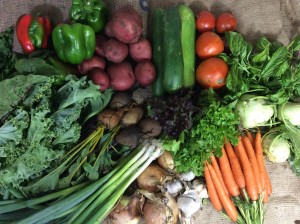
CSA 2016 wk 10

1. Spinach (Spring and Fall and Winter)

This leafy green tops the chart as one of the healthiest vegetables, thanks to its impressive nutrient profile.  We would love to grow it all year but it just can’t take the Missouri summer heat.

One cup (30 grams) of raw spinach provides 56% of your daily vitamin A needs plus your entire daily vitamin K requirement — all for just 7 calories.

Spinach also boasts a great deal of antioxidants, which can help reduce the risk of chronic disease.

One study found that dark green leafy vegetables like spinach are high in beta-carotene and lutein, two types of antioxidants that have been associated with a decreased risk of cancer.

In addition, a 2015 study found that spinach consumption may be beneficial for heart health, as it may lower blood pressure.

2. Carrots (All Season)

The carrots we grow are packed with vitamin A, providing 428% of the daily recommended value in just one cup (128 grams).

They contain beta-carotene, an antioxidant that gives carrots their vibrant orange color and could help in cancer prevention.

In fact, one study revealed that for each serving of carrots per week, participants’ risk of prostate cancer decreased by 5%.

Another study showed that eating carrots may reduce the risk of lung cancer in smokers as well. Compared to those who ate carrots at least once a week, smokers who did not eat carrots had a three times greater risk of developing lung cancer.

Our carrots are consistently a big crowd pleaser.  Kids and adults love the sweet crunch of our fresh-dug carrots.

3. Broccoli (Spring and Fall)

We grow big heads and mini broccolini.  Broccoli belongs to the cruciferous family of vegetables along with Chinese cabbage, turnips, and radishes that we also grow.

It is rich in a sulfur-containing plant compound known as glucosinolate, as well as sulforaphane, a by-product of glucosinolate.

Sulforaphane is significant in that it has been shown to have a protective effect against cancer.

In one animal study, sulforaphane was able to reduce the size and number of breast cancer cells while also blocking tumor growth in mice.

Eating broccoli may help prevent other types of chronic disease, too.

In addition to its ability to prevent disease, broccoli is also loaded with nutrients.

A cup (91 grams) of raw broccoli provides 116% of your daily vitamin K needs, 135% of the daily vitamin C requirement and a good amount of folate, manganese and potassium.
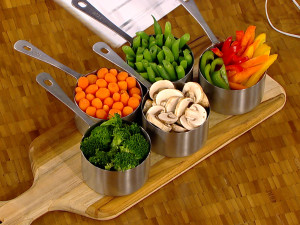
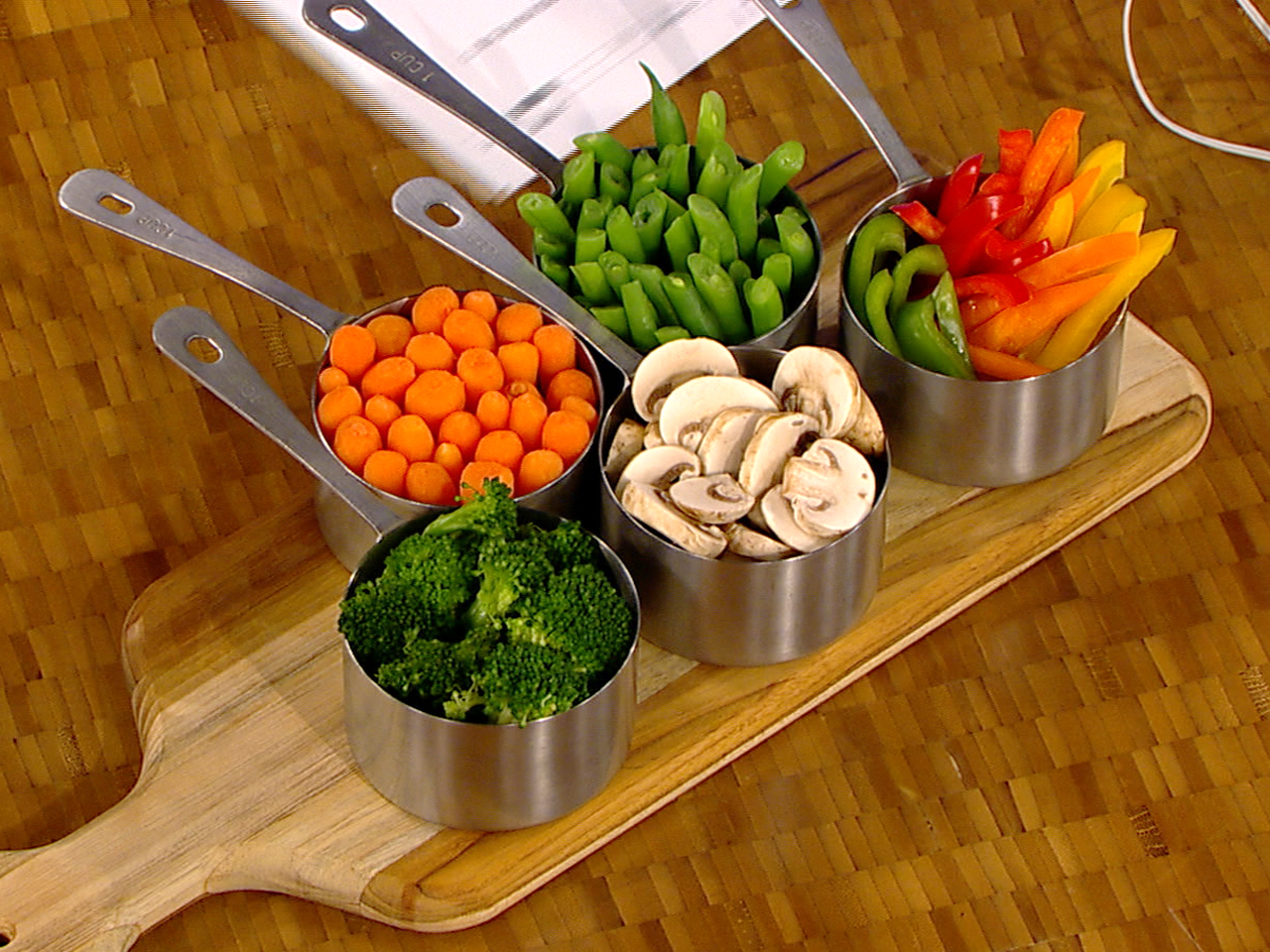
vegetables in cup measurements

4. Garlic (Summer and Fall)

Garlic has a long history of use as a medicinal plant, with roots tracing all the way back to ancient China and Egypt.  We love growing it and once pulled in early summer, it’s available until we sell out sometime in fall.  Oh, don’t forget we also have garlic scapes early in spring.

The main active compound in garlic is allicin, a plant compound that is largely responsible for garlic’s variety of health benefits.

Several studies have shown that garlic can regulate blood sugar as well as promote heart health.

In one animal study, diabetic rats were given either garlic oil which caused a decrease in blood sugar and improved insulin sensitivity.

Another study fed garlic to participants both with and without heart disease. Results showed that garlic was able to decrease total blood cholesterol, triglycerides and LDL cholesterol while increasing HDL cholesterol in both groups.

Garlic may be useful in the prevention of cancer as well. One test-tube study demonstrated that allicin induced cell death in human liver cancer cells.

5. Kale (All Season)

We offer Kale 12 months out of the year.  We’re growing four different types this year for increased variety and fun.  Like other leafy greens, kale is well-known for its health-promoting qualities, including its nutrient density and antioxidant content.

A cup (67 grams) of raw kale contains plenty of B vitamins, potassium, calcium and copper.

It also fulfills your entire daily requirement for vitamins A, C and K.

Due to its high amount of antioxidants, kale may also be beneficial in promoting heart health.

In a 2008 study, 32 men with high cholesterol drank 150 ml of kale juice daily for 12 weeks. By the end of the study, HDL cholesterol increased by 27%, LDL cholesterol decreased by 10% and antioxidant activity was increased.

Another study showed that drinking kale juice can decrease blood pressure and may be beneficial in reducing both blood cholesterol and blood sugar.

6. Sugar Snap Peas (Spring and Fall)

Nobody turns down these incredible snacks!  Oh so super sweet and crunchy!  We just wish they were easier to pick:)  Peas are considered a starchy vegetable. This means they have a higher amount of carbs and calories than non-starchy vegetables and may impact blood sugar levels when eaten in large amounts.

Nevertheless, green peas are incredibly nutritious.

One cup (160 grams) of cooked green peas contains 9 grams of fiber, 9 grams of protein and vitamins A, C and K, riboflavin, thiamin, niacin and folate.

Because they are high in fiber, peas support digestive health by enhancing the beneficial bacteria in your gut and promoting regular bowel movements.

Moreover, peas are rich in saponins, a group of plant compounds known for their anti-cancer effects.

Research shows that saponins may help fight cancer by reducing tumor growth and inducing cell death in cancer cells.

7. Swiss Chard (All Season)

We grow a wide array of multicolored chard.  It’s beautiful and available all season.  Swiss chard is low in calories but high in many essential vitamins and minerals.

One cup (36 grams) contains just 7 calories yet 1 gram of fiber, 1 gram of protein and lots of vitamins A, C and K, manganese and magnesium.

Swiss chard is especially known for its potential to prevent damage caused by diabetes mellitus.

In one animal study, chard extract was found to reverse the effects of diabetes by decreasing blood sugar levels and preventing cell damage from disease-causing free radicals.

Other animal studies have shown that the antioxidant content of chard extract can protect the liver and kidneys from the negative effects of diabetes

8. Ginger (Late Summer and Fall)

Ginger is a tropical plant but we’ve managed to grow it in Missouri!  The ginger we grow is so much fresher than anything you’ve seen in the store.  You’ll have to see it to believe it.  Ginger root is used as a spice in everything from vegetable dishes to desserts.

Historically, ginger has also been used as a natural remedy for motion sickness.

Several studies have confirmed the beneficial effects of ginger on nausea. In a review comprised of 12 studies and nearly 1,300 pregnant women, ginger significantly reduced nausea compared to a placebo.

Ginger also contains potent anti-inflammatory properties, which can be helpful in treating inflammation-related disorders like arthritis, lupus or gout.

In one study, participants with osteoarthritis who were treated with a concentrated ginger extract experienced reduced knee pain and relief from other symptoms.

Further research suggests that ginger could aid in the treatment of diabetes as well.

A 2015 study looked at the effects of ginger supplements on diabetes. After 12 weeks, ginger was found to be effective in decreasing blood sugar levels.

9. Sweet Potatoes (Fall)

We took a year off growing these last year but they are back this year by popular demand.

Classified as a root vegetable, sweet potatoes stand out for their vibrant orange color, sweet taste and impressive health benefits.

One medium sweet potato contains 4 grams of fiber, 2 grams of protein and a good amount of vitamin C, vitamin B6, potassium and manganese.

It’s also high in a form of vitamin A called beta-carotene. In fact, one sweet potato fulfills 438% of your daily vitamin A needs.

Beta-carotene consumption has been linked to a significant decrease in the risk of certain types of cancer, including lung and breast cancer.

10. Kohlrabi (Spring and Fall)

OK, this one is one you have to grow to love.  Most folks have never even seen one before but they really are delicious and as you can see, incredibly nutritious.  Also known as the turnip cabbage or German turnip, kohlrabi is a vegetable related to the cabbage that can be eaten raw or cooked.

Raw kohlrabi is high in fiber, providing 5 grams in each cup (135 grams). It’s also full of vitamin C, providing 140% of the daily value per cup.

Studies have shown that the antioxidant content of kohlrabi makes it a powerful tool against inflammation and diabetes.

In one animal study, kohlrabi extract was able to decrease blood sugar levels by 64% within just seven days of treatment.

The Bottom Line

From providing essential vitamins and minerals to fighting disease, it’s clear that including vegetables in your diet is crucial for good health.

Joining Where the Redfearn Grows Natural Farms CSA program is a great way to ensure that you’re getting a good mix of vegetables in your diet to take advantage of their many diverse health benefits and get the most nutritional bang for your buck.

We are accepting new members now.  Don’t delay!  The season starts soon and space is limited!  We’d love to be your farmers so that together we can change the way you eat!

Questions about joining our CSA? Call us – 816-457-1223 or email us at sheri@redfearnfarm.com.
Sign up Now for Farm Fresh Local Produce!

We are busily preparing for our 6th growing season serving Independence, Blue Springs, Lee’s Summit and Kansas City!  Save 10% off your CSA membership now!

Redfearn Farmers Lee's Summit CSAIf you want to eat local and eat healthy, joining Where the Redfearn Grows Natural Farms CSA Membership Plan is the perfect way to boost your intake of healthy foods sustainably grown by your neighborhood farmers.  The CSA is a membership plan that allows you to share in the produce from our Independence, MO family farm.  In effect, by joining the CSA you are joining into a very large home-grown organic vegetable garden–A garden managed without the use of harmful chemical pesticides or herbicides, and one that requires far less of your time and yields far more variety than if you were to put in your own garden.  We offer two different membership levels to meet the needs of your household.   The Basic Share  includes 5 different types of vegetables or 20-25 servings per week.   The Premium Share includes 8 different vegetables or 32 – 40 servings per week.

So why join our CSA program?

  • When you join our CSA you’ll receive a steady stream of fresh vegetables for 20 weeks
  • Freedom to Choose. Where the Redfearn Grows Natural Farms CSA allows you to customize the contents of your box.  Unlike most Kansas City CSA’s, we have a market style CSA.  Each week you choose the contents of your box from the wide variety of available crops.  Read more here about how our CSA works.
  • Seasonal Eating. CSA members truly eat with the seasons, enjoying fresh leafy greens throughout the summer, tomatoes in July, and hearty roots and sturdy greens in the fall. Our seasonal produce is picked at the height of freshness, yielding the highest nutritional content.
  • Fresh, fresh, fresh. When you join our CSA your vegetables will come from the field to your table within a couple days, allowing you to serve your family the freshest food possible.
  • Meal Planning. CSA vegetables provide a healthy base for weekly meal planning. With every CSA Share we include meal ideas, recipes, and general prep and storage tips. Eating healthy becomes easy and routine. Click Here to view a sample weekly email.
  • Exposure to new foods. We grow a lot of crops that are familiar to most people.  Most weeks you’ll have the option to choose an item or two that might be new to you, try them right along with your favorite foods. This is also a great way to get kids trying new foods from the start, make trying new foods a fun and regular occurrence!
  • Connection to your Food and Farmers.  You’ll get a chance to meet your farmers and understand what went into the food on your table.  You’ll be seeing us each week when you pick up your shares either at the farm or the Lee’s Summit Farmer’s Market.  Members love bringing kids to feed the chickens and enjoy the outdoors.  If you like getting your hands dirty and want to save some money, you can also get a discount by signing up for work shifts to help us harvest a few times throughout the season.
  • Options for other great farm produce.  We provide free range eggs and honey from our farm for sale.  We also have our own farm raised hormone free pork and grass fed beef for sale at the farm.  If you pick up at the farm we often have some blemished produce available for free to CSA members.
  • Our farm serves a large area of Eastern Kansas City.  We have pick up locations at the Independence farm as well as at the Lee’s Summit Farmer’s Market.
  • Our CSA shares break down to a very low cost per week.  Members boxes include more than the retail value each week, giving our members access to fresh, healthy food at a reduced price.  Sign up now and get 10% off this great rate!
  • You’ll be doing your part to support local, environmentally-responsible agriculture!
  • Sign up before February 28 to get the 10% early sign-up discount.

Click Here to check out your CSA membership options.  2018 Shares are limited!

Where the Redfearn Grows Natural Farms was founded with the belief that natural ecosystems hold within them the keys to growing healthy food. We believe in cooperation with nature rather than the subjugation of it. We bring ancient organic agricultural wisdom and modern biological research together to develop growing practices for our community supported agriculture program (CSA) that mimic naturally-occurring processes.  The result is healthier food and a healthier environment. For all produce grown for our Kansas City area community supported agriculture program we reject the use of: chemical pesticides, herbicides, fertilizers or GMO seeds. We aim to protect biodiversity, build organic matter in the soil, prevent pollution, reduce waste, and conserve resources on our Independence Missouri farm. The health of our family, our customers and our environment is of critical importance to us. That is why preserving natural practices in growing the produce we provide to our Kansas City area CSA members is part of who we are.

Questions about joining our CSA? Call us – 816-457-1223 or email us at sheri@redfearnfarm.com.

CSA 2016 wk 14 Independence, MO

Save Now on Fresh Locally-Grown Produce

Don’t miss out on the harvest Kansas City!  Save 10% off your CSA membership now!

Redfearn Farmers Lee's Summit CSAIf you want to eat local and eat healthy, joining Where the Redfearn Grows Natural Farms CSA Membership Plan is the perfect way to boost your intake of healthy foods sustainably grown by your neighborhood farmers.  The CSA is a membership plan that allows you to share in the produce from our Independence, MO family farm.  In effect, by joining the CSA you are joining into a very large home-grown organic vegetable garden–A garden managed without the use of harmful chemical pesticides or herbicides, and one that requires far less of your time and yields far more variety than if you were to put in your own garden.  We offer two different membership levels to meet the needs of your household.   The Basic Share  includes 5 different types of vegetables or 20-25 servings per week.   The Premium Share includes 8 different vegetables or 32 – 40 servings per week.

So why join our CSA program?

  • When you join our CSA you’ll receive a steady stream of fresh vegetables for 20 weeks
  • Freedom to Choose. Where the Redfearn Grows Natural Farms CSA allows you to customize the contents of your box.  Unlike most Kansas City CSA’s, we have a market style CSA.  Each week you choose the contents of your box from the wide variety of available crops.  Read more here about how our CSA works.
  • Seasonal Eating. CSA members truly eat with the seasons, enjoying fresh leafy greens throughout the summer, tomatoes in July, and hearty roots and sturdy greens in the fall. Our seasonal produce is picked at the height of freshness, yielding the highest nutritional content.
  • Fresh, fresh, fresh. When you join our CSA your vegetables will come from the field to your table within a couple days, allowing you to serve your family the freshest food possible.
  • Meal Planning. CSA vegetables provide a healthy base for weekly meal planning. With every CSA Share we include meal ideas, recipes, and general prep and storage tips. Eating healthy becomes easy and routine. Click Here to view a sample weekly email.
  • Exposure to new foods. We grow a lot of crops that are familiar to most people.  Most weeks you’ll have the option to choose an item or two that might be new to you, try them right along with your favorite foods. This is also a great way to get kids trying new foods from the start, make trying new foods a fun and regular occurrence!
  • Connection to your Food and Farmers.  You’ll get a chance to meet your farmers and understand what went into the food on your table.  You’ll be seeing us each week when you pick up your shares either at the farm or the Lee’s Summit Farmer’s Market.  Members love bringing kids to feed the chickens and enjoy the outdoors.  If you like getting your hands dirty and want to save some money, you can also get a discount by signing up for work shifts to help us harvest a few times throughout the season.
  • Options for other great farm produce.  We provide free range eggs and honey from our farm for sale.  We also have our own farm raised hormone free pork and grass fed beef for sale at the farm.  If you pick up at the farm we often have some blemished produce available for free to CSA members.
  • Our farm serves a large area of Eastern Kansas City.  We have pick up locations at the Independence farm as well as at the Lee’s Summit Farmer’s Market.
  • Our CSA shares break down to a very low cost per week.  Members boxes include more than the retail value each week, giving our members access to fresh, healthy food at a reduced price.  Sign up now and get 10% off this great rate!
  • You’ll be doing your part to support local, environmentally-responsible agriculture!
  • Sign up before February 28 to get the 10% early sign-up discount.

Click Here to check out your CSA membership options.  2018 Shares are limited!

Where the Redfearn Grows Natural Farms was founded with the belief that natural ecosystems hold within them the keys to growing healthy food. We believe in cooperation with nature rather than the subjugation of it. We bring ancient organic agricultural wisdom and modern biological research together to develop growing practices for our community supported agriculture program (CSA) that mimic naturally-occurring processes.  The result is healthier food and a healthier environment. For all produce grown for our Kansas City area community supported agriculture program we reject the use of: chemical pesticides, herbicides, fertilizers or GMO seeds. We aim to protect biodiversity, build organic matter in the soil, prevent pollution, reduce waste, and conserve resources on our Independence Missouri farm. The health of our family, our customers and our environment is of critical importance to us. That is why preserving natural practices in growing the produce we provide to our Kansas City area CSA members is part of who we are.

Questions about joining our CSA? Call us – 816-457-1223 or email us at sheri@redfearnfarm.com.

Eat Fresh all winter with Kansas City-Grown Produce!

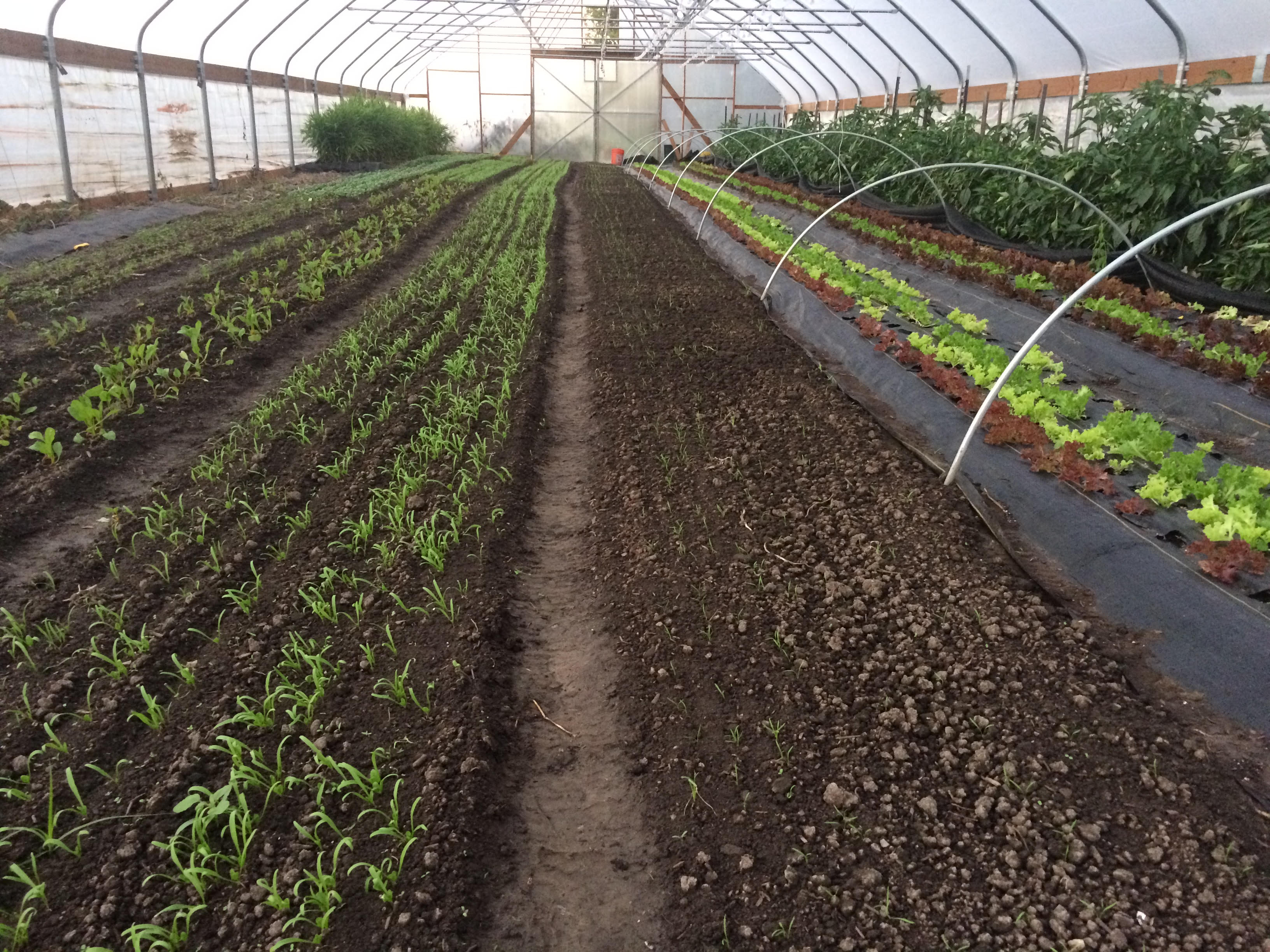
Greenhouse winter kansas cityJust because fall is here and winter is around the corner doesn’t mean you have to stop eating locally-grown produce from farmers you know and trust.  This year, Where the Redfearn Grows Natural Farms is offering our first ever Winter CSA!

Winter growing is actually what got Dave started in organic gardening and farming in the first place.  Dave first geeked out about winter growing back in 2009 after reading a couple books from his farming hero Elliot Coleman:  The Four Season Harvest and The New Organic Grower.  Ever since then, even back in our suburban lot, we’ve been experimenting with low-tech season extension and winter production of nutrient-dense foods.  One of the first things we built in 2013 was a high tunnel.  Now we have a greenhouse and two huge unheated high tunnels along with dozens of mini-low tunnels where we pump out winter production.

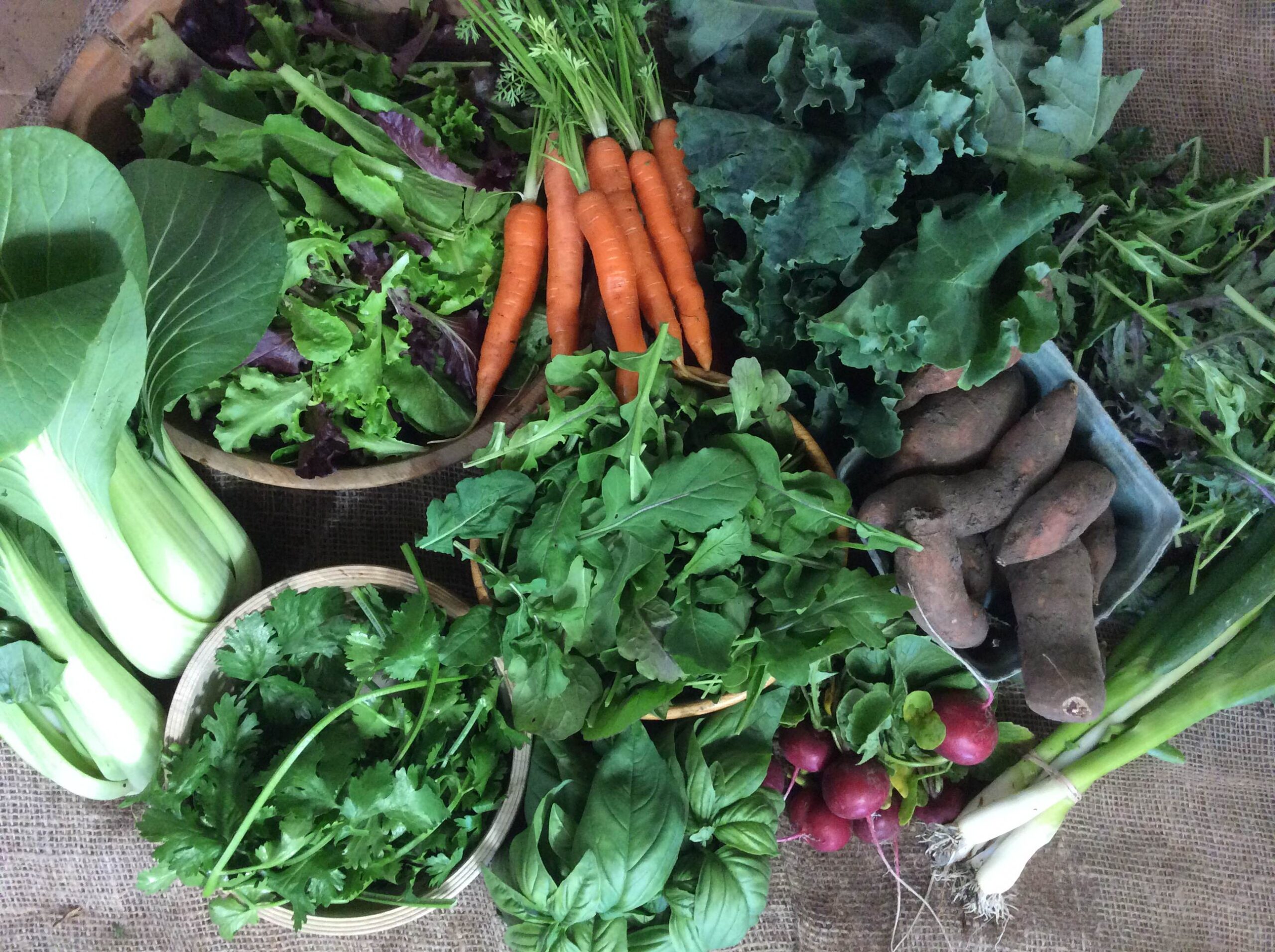
Growing in winter in Independence, MO is a challenge, but it’s a lot of fun as well.  We grow a wide variety of cold-hardy crops that can withstand the freezing temperatures even under protection.  Top producers are spinach, kale, carrots, radishes, lettuce, arugula, green onions, asian stir-fry mix, bok choy, cilantro, parsley, salad turnips and collards.  We also grow some novelty greens that make excellent winter salads like minituna, mache, claytonia and endive.  We’ll also throw in some storage crops we’ve held over like sweet potatoes, winter squash, garlic and maybe some daikon radishes.

You can’t imagine how good a fresh carrot tastes that has been nipped by the frost!  The starches turn to sugar as part of the carrot’s winterizing process which makes them the sweetest carrots you can imagine.  Something similar happens to the greens as well.  We think the spinach and kale are particularly at their peak in winter.  Our winter produce will knock the socks off of the hydroponic stuff sprayed with who-knows-what and trucked-in from who-know-where.  Isn’t it awesome to have the chance to eat locally and seasonally right here in KC?

So here’s how the program works:  Sign up now to become a member and to get a box of produce just about every other week throughout the season.  The Winter CSA will consist of 9 pickups at the farm in Independence, MO on the following Mondays: Nov 20, Dec 4, Dec 18, Jan 29, Feb 12, Feb 26, Mar 12, Mar 26, and Apr 9.   Pickup time will be 3pm to 6pm.  You’ll receive a total of 7 items per pickup.  We’ll try to offer choices between a few items whenever possible, but given the challenge of winter production, the boxes will be mostly determined by the winter growing conditions.

The first pickup will be before Thanksgiving so you can pick up your sweet potatoes and other Thanksgiving fixings at the farm!  We’ll also have some of our on-farm raised ham’s and steaks available for sale at all the pickup times.

This is your chance to eat fresh even in winter!  There is no work requirement associated with the winter CSA.  Just come on out to the farm and enjoy the magic of winter growing!  And of course be prepared for the main season CSA staring up in the spring!

[button class=”green-gray big” url=”https://redfearnfarm.com/product/2017-winter-csa-redfearn-farm/” text=”Sign up for the Winter CSA Now!”]


https://redfearnfarm.com/product/2017-winter-csa-redfearn-farm/

CSA 2017- Main Season, Week 20

This is the 20th week of the CSA main season, members with Basic shares will be able to choose 5 items each week and members with Premium will be able to choose 8 items each week. The produce available for the Week 20 are: Fresh Ginger, Artisan Head Lettuce,  Summer Squash (zucchini, Yellow and Patty Pan Squash), Beets, Swiss Chard, Kale, Bok Choy,  Stir fry greens, Carrots (from Fruitful Hills), Butternut Squash (from Fruitful Hills)  and “Half” items: Eggplant, Baby Arugula, Spicy peppers (Jalapenos, Anaheim, Serrano, Cayenne, Poblano), Cucumbers, Garlic Bulb,  Radishes, Baby turnip bunches.

Fresh Baby Ginger (Choice Item): Fresh Ginger should be kept in the fridge, in a plastic bag. The stalks should be removed and used within a few days or dried for later use. If you do not plan on using the rhizome within a week, the best way to store it is in the freezer. To use it, just remove it, grate the quantity needed, and return it to the freezer! Enjoy fresh ginger all year long! The fresh baby ginger is a whitish rhizome with pink tips, and does not have the tough skin or fibrous nature of the cured ginger you get in the supermarket. So thin skinned you don’t have to peel it and so smooth, it slices (almost) like butter. The root (technically a rhizome) is delicious. Juicier than the more mature rhizomes typically found in stores. It is delightful added to stir fry, made into ginger tea, with fish (as in this Ginger and Cilantro Tilapia) or even minced raw on yogurt or ice cream. The stalks and leaves can be used to make tea or infuse rice with a taste of ginger. Just slice them diagonally, steep, and enjoy! Here is a great link that has detailed info about baby ginger, how to store it and recipe ideas. Read about the medicinal properties of ginger, here.

Salad/ Lettuce heads (Choice Item): Store in plastic bag in the refrigerator. Wash before eating, and dry well. For salad inspiration, look at this: Mesclun Salad with goat cheese, or Chart of Salad Toppings Combinations.

Arugula (Choice Item)store in plastic bag in refrigerator.  This slightly spicy salad green is wonderful in this Roasted Sweet Potato Arugula Salad! Arugula is also wonderful topped with thinly sliced steak, as in this: Skirt Steak Salad with Arugula and Blue Cheese. Combine arugula with pasta in this Goat Cheese and Arugula over Penne  dish. Arugula can also be sautéed in olive oil with some garlic just until wilted. Arugula is great in this Arugula Soup that our whole family enjoys (2 onions can be substituted for the 6 shallots in the recipe, larger potatoes can be used instead of the salad potatoes). Some other ideas are listed in this: Top 5 Uses for Arugula Besides Salad. To preserve: wash arugula, cut off the stems, blanch in boiling water for 30 seconds, then cool in an ice bath, drain well and freeze. Frozen arugula can be used in soups, added to casseroles, pasta dishes, or anything that uses cooked arugula.

Summer squash, patty pan, yellow squash and zucchini (Choice Item): store in plastic bag in refrigerator. Yellow squash nearly interchangeable with zucchini and is great raw or sautéed, grilled, or baked into zucchini bread (my kids favorite way to eat zucchini!). Raw zucchini/ squash makes a fresh, flavorful salad as in this: Summer Squash Salad with Lemon Citronette. Zucchini (sliced and broiled or pan fried) can take the place of pasta in lasagna. If you want more ideas, you can try Baked Zucchini FriesZucchini Fritters  or Chocolate Zucchini Bread or these main dishes Baked Penne with Roasted Vegetables (this is a great recipe to use a lot of vegetables, including zucchini, yellow squash, eggplant, peppers, onions and garlic),  Cheesy Zucchini Casserole (which we make with shredded sharp cheddar, instead of Velvetta). Here’s a couple other zucchini recipes, recommended by CSA members: Curried Zucchini SoupZucchini TotsSauteed Zucchini with Cherry Tomatoes (don’t overcook the zucchini!), and Zucchini Chocolate Rum Cake. To preserve: Zucchini or Yellow squash can be shredded and frozen to use in Zucchini bread recipes.

Swiss Chard (Choice Item): Store in plastic bag in the refrigerator. The swiss chard leaves have a very mild flavor similar to spinach. Both the stem and the leaves can be eaten and I usually use both together; chop the stems like you would celery and begin cooking the stems before adding the greens. This is a basic swiss chard recipe: Swiss Chard with Balsamic Vinegar. Our family really likes this Swiss Chard, Sausage, White bean casserole ( I use the stems and leaves of the chard). Swiss Chard is a great addition to pasta in this: Rigatoni with Swiss chard and Italian Sausage dish. This Swiss Chard and Ricotta Crostata  is a wonderful recipe, and one of my all-time favorites. Swiss chard leaves can be used just like spinach in my Crustless Spinach Quiche recipe. Swiss chard can also be used in curry, as in these: Saag Paneer (I have used a bunch of swiss chard in place of spinach in this recipe; I washed, then coarsely chopped the chard stems and leaves, and then processed the swiss chard while raw in a food processor) and Curried Lentils and Sweet Potatoes.

Bok Choy (Choice Item): Store in plastic bag in the refrigerator. Here is a basic bok choy recipe with great instructions: Stir-fried Bok Choy . Cooked (leftover) Bok Choy can be added to fried rice. Bok Choy can also be cooked and used inside egg rolls (I just followed the instructions on the back of the package of egg roll wrappers). Bok Choy can also be grilled, as in this Grilled Baby Bok Choy with Miso butter! Bok choy can be sliced and added to soups during the last few minutes of cooking.If you would rather eat bok choy raw; it can be chopped and dressed with an asian- style dressing: Bok Choy Salad

Stir-fry greens mix (Choice item): Store in plastic bag in refrigerator, use within a couple days. This greens mix contains a variety of nutritious cabbage family greens including Mizuna, baby Red Russian Kale and Tatsoi. Basic cooking instructions: wash and spin dry, slice or chop greens, heat oil (olive or vegetable) over medium-high heat. Gradually add chopped greens, stirring to just wilt.  Season with salt and pepper.  Variations: add chopped garlic when you add the greens. Top the cooked greens with a fried egg(s). Here’s a detailed sir-fried greens recipe. Our family’s favorite way to enjoy stir-fry greens is alongside Korean Beef on a bowl of rice, topped with a fried egg. This recipe for Greens cooked with tomatoes and topped with eggs has helped many people enjoy greens. It is a highly adaptable recipe, and can be used with nearly any type of leafy cooking green, from spicy mustards to mellow chard.

Cucumber (HALF-Choice Item)store in plastic bag in refrigerator (our cucumbers are not waxed, so will lose moisture and become rubbery if not wrapped). Recipe Ideas: Cucumber infused WaterSmoothies with Cucumbers, Cucumber Salads: Creamy Cucumber Salad with Greek Yogurt and DillCucumber Salad with Garlic and Ginger and even Stir-fried Cucumbers! Pair with tomatoes in an Israeli SaladCucumber, Tomato, and Avocado Salad, Greek Salad and Panzanella Salad. Cucumbers are the base for the Mediterranean sauce, TzatzikiCold Cucumber Soup is also a refreshing way to use cucumbers.

Radishes (HALF-Choice Item): Store in plastic bag in refrigerator. Crisp radishes in ice water. Sliced radishes add great flavor to salads. You can also just eat them straight with butter and a sprinkle of salt. There are many variations of radish salads, here are a couple: Radish and Mint Salad , Smitten Kitchen’s chopped salad,  and Radish, Cucumber and Orange Salad. Radishes are milder when roasted or cooked. I cut radishes in half and toss with a little olive oil, salt and pepper and roast at 425F until tender crisp (they can be roasted alongside sweet potatoes or carrots for a nice flavor and color combination).

Green Onions (HALF-Choice Item): Store in plastic bag in the refrigerator. Use in lots of Chinese/ other asian recipes (General Tso’s chicken and Korean beef are two Redfearn favorites) chicken salad, egg salad, salad dressing to name a few.

Eggplant (Half-Choice Item):Store in plastic bag in the refrigerator, but use quickly, because eggplant doesn’t store well. Eggplant can be sauteed, grilled or roasted.  Some wonderful eggplant recipes (that don’t require salting and draining the eggplant) are No-Fuss Eggplant ParmesanEggplant Parmesan Melts and Smitten Kitchen’s Eggplant Bruschetta (which has a Mediterranean style topping).Here’s a page with detailed instructions about eggplant preparation and recipes: Fine Cooking: How to cook Eggplant. It is great combined with zucchini and tomatoes (such as in Ratatouille). For eggplant recipes from Italy to China, check out these: Global Eggplant Recipes. Moussaka is a greek dish with eggplant. Here is a relatively simple recipe for Moussaka recommended by a CSA member (and also tried and deliciously approved by the Redfearn family). Some chefs suggest salting and draining the prepared (sliced, cubed, etc) eggplant for at least 20-30 minutes before cooking (this takes away any bitterness and also, helps the eggplant to absorb less oil during cooking), but I have gotten away from it the past year.

Radishes (Half- Choice Item): Store in plastic bag in refrigerator. Crisp radishes in ice water. Sliced radishes add great flavor to salads. You can also just eat them straight with butter and a sprinkle of salt. There are many variations of radish salads, here are a couple: Radish and Mint Salad , Smitten Kitchen’s chopped salad,  and Radish, Cucumber and Orange Salad. Radishes are milder when roasted or cooked. I cut radishes in half and toss with a little olive oil, salt and pepper and roast at 425F until tender crisp (they can be roasted alongside sweet potatoes or carrots for a nice flavor and color combination).

Salad turnips (Half- Choice Item): Salad turnips are crunchy, sweet and only slightly peppery. Storage Tips: The leaves cause moisture loss during storage, so it is best to remove tops and store the root and greens separately in the refrigerator. Preparation and Cooking: Enjoy salad turnips as you would radishes in fresh salads. Salad turnips can also be thinly sliced and sauteed, or pickled with other vegetables. Other detailed recipes are Salad turnip and radish sandwiches and Turnip and Apple Salad, Roasted turnips, Glazed turnips and more.

Green Onions (Half- Choice Item): Store in plastic bag in the refrigerator. Use in lots of Chinese/ other asian recipes (General Tso’s chicken and Korean beef are two Redfearn favorites) chicken salad, egg salad, salad dressing to name a few.

Cabbage (Half- Choice Item): Store in the refrigerator. Cabbage can be stir friedroastedpaired with Kielbasa Sausage, made into salad or into Sauerkraut. Sauerkraut is one of the best ways to preserve cabbage.

Spicy peppers (Half-Choice item): Jalapeno or Anaheim peppers. Store in plastic bag, in refrigerator. Ideas: Chop and add to salsa, or our new favorite is this Jalapeno Popper Dip. If you want to try water-bath canning, try this Jalapeno Jelly (I’ve used a combination of peppers). Anaheim and poblano peppers can be stuffed, as in these Chicken and Cheese Stuffed Anaheim Peppers, or Black beans and Cheese stuffed Poblano Peppers, or Rice and Beef stuffed Peppers and used as a stuffing in Jalapeno Popper Chicken. Peppers can be frozen; slice or dice and then place in freezer bags, can be used in fajitas, or anywhere you would use cooked peppers (after thawing the peppers are soft).

Sweet Candy Onions (Half- Choice Item):Store in a cool, dry, well ventilated area; in a bowl/ basket on your counter should be fine, but NOT right by Potatoes (Onions produce ethylene, which can cause potatoes to go bad). Here is some inspiration if you need more ideas of how to use onions: 50 Onion Recipes.

Garlic (Half- Choice Item):Store in a cool, dry, well ventilated area; in a bowl/ basket on your counter should be fine.

If you would like more recipe ideas, I have a pinterest board devoted to CSA vegetable recipes:  http://www.pinterest.com/sheriredfearn/csa-veggies-recipes/

CSA 2017- Main Season, Week 19

This is the 19th week of the CSA main season, members with Basic shares will be able to choose 5 items each week and members with Premium will be able to choose 8 items each week. The produce available for the Week 19 are: Fresh Ginger, Artisan Head Lettuce,  Summer Squash (zucchini, Yellow and Patty Pan Squash), Beets, Swiss Chard, Kale, Bok Choy,  Stir fry greens, Carrots (from Fruitful Hills), Butternut Squash (from Fruitful Hills)  and “Half” items: Eggplant, Baby Arugula, Spicy peppers (Jalapenos, Anaheim, Serrano, Cayenne, Poblano), Cucumbers, Garlic Bulb,  Radishes, Baby turnip bunches.

Fresh Baby Ginger (Choice Item): Fresh Ginger should be kept in the fridge, in a plastic bag. The stalks should be removed and used within a few days or dried for later use. If you do not plan on using the rhizome within a week, the best way to store it is in the freezer. To use it, just remove it, grate the quantity needed, and return it to the freezer! Enjoy fresh ginger all year long! The fresh baby ginger is a whitish rhizome with pink tips, and does not have the tough skin or fibrous nature of the cured ginger you get in the supermarket. So thin skinned you don’t have to peel it and so smooth, it slices (almost) like butter. The root (technically a rhizome) is delicious. Juicier than the more mature rhizomes typically found in stores. It is delightful added to stir fry, made into ginger tea, with fish (as in this Ginger and Cilantro Tilapia) or even minced raw on yogurt or ice cream. The stalks and leaves can be used to make tea or infuse rice with a taste of ginger. Just slice them diagonally, steep, and enjoy! Here is a great link that has detailed info about baby ginger, how to store it and recipe ideas. Read about the medicinal properties of ginger, here.

Salad/ Lettuce heads (Choice Item): Store in plastic bag in the refrigerator. Wash before eating, and dry well. For salad inspiration, look at this: Mesclun Salad with goat cheese, or Chart of Salad Toppings Combinations.

Arugula (Choice Item)store in plastic bag in refrigerator.  This slightly spicy salad green is wonderful in this Roasted Sweet Potato Arugula Salad! Arugula is also wonderful topped with thinly sliced steak, as in this: Skirt Steak Salad with Arugula and Blue Cheese. Combine arugula with pasta in this Goat Cheese and Arugula over Penne  dish. Arugula can also be sautéed in olive oil with some garlic just until wilted. Arugula is great in this Arugula Soup that our whole family enjoys (2 onions can be substituted for the 6 shallots in the recipe, larger potatoes can be used instead of the salad potatoes). Some other ideas are listed in this: Top 5 Uses for Arugula Besides Salad. To preserve: wash arugula, cut off the stems, blanch in boiling water for 30 seconds, then cool in an ice bath, drain well and freeze. Frozen arugula can be used in soups, added to casseroles, pasta dishes, or anything that uses cooked arugula.

Summer squash, patty pan, yellow squash and zucchini (Choice Item): store in plastic bag in refrigerator. Yellow squash nearly interchangeable with zucchini and is great raw or sautéed, grilled, or baked into zucchini bread (my kids favorite way to eat zucchini!). Raw zucchini/ squash makes a fresh, flavorful salad as in this: Summer Squash Salad with Lemon Citronette. Zucchini (sliced and broiled or pan fried) can take the place of pasta in lasagna. If you want more ideas, you can try Baked Zucchini FriesZucchini Fritters  or Chocolate Zucchini Bread or these main dishes Baked Penne with Roasted Vegetables (this is a great recipe to use a lot of vegetables, including zucchini, yellow squash, eggplant, peppers, onions and garlic),  Cheesy Zucchini Casserole (which we make with shredded sharp cheddar, instead of Velvetta). Here’s a couple other zucchini recipes, recommended by CSA members: Curried Zucchini SoupZucchini TotsSauteed Zucchini with Cherry Tomatoes (don’t overcook the zucchini!), and Zucchini Chocolate Rum Cake. To preserve: Zucchini or Yellow squash can be shredded and frozen to use in Zucchini bread recipes.

Swiss Chard (Choice Item): Store in plastic bag in the refrigerator. The swiss chard leaves have a very mild flavor similar to spinach. Both the stem and the leaves can be eaten and I usually use both together; chop the stems like you would celery and begin cooking the stems before adding the greens. This is a basic swiss chard recipe: Swiss Chard with Balsamic Vinegar. Our family really likes this Swiss Chard, Sausage, White bean casserole ( I use the stems and leaves of the chard). Swiss Chard is a great addition to pasta in this: Rigatoni with Swiss chard and Italian Sausage dish. This Swiss Chard and Ricotta Crostata  is a wonderful recipe, and one of my all-time favorites. Swiss chard leaves can be used just like spinach in my Crustless Spinach Quiche recipe. Swiss chard can also be used in curry, as in these: Saag Paneer (I have used a bunch of swiss chard in place of spinach in this recipe; I washed, then coarsely chopped the chard stems and leaves, and then processed the swiss chard while raw in a food processor) and Curried Lentils and Sweet Potatoes.

Bok Choy (Choice Item): Store in plastic bag in the refrigerator. Here is a basic bok choy recipe with great instructions: Stir-fried Bok Choy . Cooked (leftover) Bok Choy can be added to fried rice. Bok Choy can also be cooked and used inside egg rolls (I just followed the instructions on the back of the package of egg roll wrappers). Bok Choy can also be grilled, as in this Grilled Baby Bok Choy with Miso butter! Bok choy can be sliced and added to soups during the last few minutes of cooking.If you would rather eat bok choy raw; it can be chopped and dressed with an asian- style dressing: Bok Choy Salad

Stir-fry greens mix (Choice item): Store in plastic bag in refrigerator, use within a couple days. This greens mix contains a variety of nutritious cabbage family greens including Mizuna, baby Red Russian Kale and Tatsoi. Basic cooking instructions: wash and spin dry, slice or chop greens, heat oil (olive or vegetable) over medium-high heat. Gradually add chopped greens, stirring to just wilt.  Season with salt and pepper.  Variations: add chopped garlic when you add the greens. Top the cooked greens with a fried egg(s). Here’s a detailed sir-fried greens recipe. Our family’s favorite way to enjoy stir-fry greens is alongside Korean Beef on a bowl of rice, topped with a fried egg. This recipe for Greens cooked with tomatoes and topped with eggs has helped many people enjoy greens. It is a highly adaptable recipe, and can be used with nearly any type of leafy cooking green, from spicy mustards to mellow chard.

Cucumber (HALF-Choice Item)store in plastic bag in refrigerator (our cucumbers are not waxed, so will lose moisture and become rubbery if not wrapped). Recipe Ideas: Cucumber infused WaterSmoothies with Cucumbers, Cucumber Salads: Creamy Cucumber Salad with Greek Yogurt and DillCucumber Salad with Garlic and Ginger and even Stir-fried Cucumbers! Pair with tomatoes in an Israeli SaladCucumber, Tomato, and Avocado Salad, Greek Salad and Panzanella Salad. Cucumbers are the base for the Mediterranean sauce, TzatzikiCold Cucumber Soup is also a refreshing way to use cucumbers.

Radishes (HALF-Choice Item): Store in plastic bag in refrigerator. Crisp radishes in ice water. Sliced radishes add great flavor to salads. You can also just eat them straight with butter and a sprinkle of salt. There are many variations of radish salads, here are a couple: Radish and Mint Salad , Smitten Kitchen’s chopped salad,  and Radish, Cucumber and Orange Salad. Radishes are milder when roasted or cooked. I cut radishes in half and toss with a little olive oil, salt and pepper and roast at 425F until tender crisp (they can be roasted alongside sweet potatoes or carrots for a nice flavor and color combination).

Green Onions (HALF-Choice Item): Store in plastic bag in the refrigerator. Use in lots of Chinese/ other asian recipes (General Tso’s chicken and Korean beef are two Redfearn favorites) chicken salad, egg salad, salad dressing to name a few.

Eggplant (Half-Choice Item):Store in plastic bag in the refrigerator, but use quickly, because eggplant doesn’t store well. Eggplant can be sauteed, grilled or roasted.  Some wonderful eggplant recipes (that don’t require salting and draining the eggplant) are No-Fuss Eggplant ParmesanEggplant Parmesan Melts and Smitten Kitchen’s Eggplant Bruschetta (which has a Mediterranean style topping).Here’s a page with detailed instructions about eggplant preparation and recipes: Fine Cooking: How to cook Eggplant. It is great combined with zucchini and tomatoes (such as in Ratatouille). For eggplant recipes from Italy to China, check out these: Global Eggplant Recipes. Moussaka is a greek dish with eggplant. Here is a relatively simple recipe for Moussaka recommended by a CSA member (and also tried and deliciously approved by the Redfearn family). Some chefs suggest salting and draining the prepared (sliced, cubed, etc) eggplant for at least 20-30 minutes before cooking (this takes away any bitterness and also, helps the eggplant to absorb less oil during cooking), but I have gotten away from it the past year.

Radishes (Half- Choice Item): Store in plastic bag in refrigerator. Crisp radishes in ice water. Sliced radishes add great flavor to salads. You can also just eat them straight with butter and a sprinkle of salt. There are many variations of radish salads, here are a couple: Radish and Mint Salad , Smitten Kitchen’s chopped salad,  and Radish, Cucumber and Orange Salad. Radishes are milder when roasted or cooked. I cut radishes in half and toss with a little olive oil, salt and pepper and roast at 425F until tender crisp (they can be roasted alongside sweet potatoes or carrots for a nice flavor and color combination).

Salad turnips (Half- Choice Item): Salad turnips are crunchy, sweet and only slightly peppery. Storage Tips: The leaves cause moisture loss during storage, so it is best to remove tops and store the root and greens separately in the refrigerator. Preparation and Cooking: Enjoy salad turnips as you would radishes in fresh salads. Salad turnips can also be thinly sliced and sauteed, or pickled with other vegetables. Other detailed recipes are Salad turnip and radish sandwiches and Turnip and Apple Salad, Roasted turnips, Glazed turnips and more.

Green Onions (Half- Choice Item): Store in plastic bag in the refrigerator. Use in lots of Chinese/ other asian recipes (General Tso’s chicken and Korean beef are two Redfearn favorites) chicken salad, egg salad, salad dressing to name a few.

Cabbage (Half- Choice Item): Store in the refrigerator. Cabbage can be stir friedroastedpaired with Kielbasa Sausage, made into salad or into Sauerkraut. Sauerkraut is one of the best ways to preserve cabbage.

Spicy peppers (Half-Choice item): Jalapeno or Anaheim peppers. Store in plastic bag, in refrigerator. Ideas: Chop and add to salsa, or our new favorite is this Jalapeno Popper Dip. If you want to try water-bath canning, try this Jalapeno Jelly (I’ve used a combination of peppers). Anaheim and poblano peppers can be stuffed, as in these Chicken and Cheese Stuffed Anaheim Peppers, or Black beans and Cheese stuffed Poblano Peppers, or Rice and Beef stuffed Peppers and used as a stuffing in Jalapeno Popper Chicken. Peppers can be frozen; slice or dice and then place in freezer bags, can be used in fajitas, or anywhere you would use cooked peppers (after thawing the peppers are soft).

Sweet Candy Onions (Half- Choice Item):Store in a cool, dry, well ventilated area; in a bowl/ basket on your counter should be fine, but NOT right by Potatoes (Onions produce ethylene, which can cause potatoes to go bad). Here is some inspiration if you need more ideas of how to use onions: 50 Onion Recipes.

Garlic (Half- Choice Item):Store in a cool, dry, well ventilated area; in a bowl/ basket on your counter should be fine.

If you would like more recipe ideas, I have a pinterest board devoted to CSA vegetable recipes:  http://www.pinterest.com/sheriredfearn/csa-veggies-recipes/

CSA 2017 Main Season- Week 18

This is the 18th week of the CSA main season, members with Basic shares will be able to choose 5 items each week and members with Premium will be able to choose 8 items each week. The produce available for the Week 16 are: Fresh Ginger, Artisan Head Lettuce,  Summer Squash (zucchini, Yellow and Patty Pan Squash), Beets, Swiss Chard, Kale, Bok Choy,  Stir fry greens, Carrots (from Fruitful Hills), Acorn and Spaghetti Squash (from Fruitful Hills)  and “Half” items: Eggplant, Baby Arugula, Spicy peppers (Jalapenos, Anaheim, Serrano, Cayenne, Poblano), Cucumbers, Garlic Bulb,  Radishes, Baby turnip bunches.

Fresh Baby Ginger (Choice Item): Fresh Ginger should be kept in the fridge, in a plastic bag. The stalks should be removed and used within a few days or dried for later use. If you do not plan on using the rhizome within a week, the best way to store it is in the freezer. To use it, just remove it, grate the quantity needed, and return it to the freezer! Enjoy fresh ginger all year long! The fresh baby ginger is a whitish rhizome with pink tips, and does not have the tough skin or fibrous nature of the cured ginger you get in the supermarket. So thin skinned you don’t have to peel it and so smooth, it slices (almost) like butter. The root (technically a rhizome) is delicious. Juicier than the more mature rhizomes typically found in stores. It is delightful added to stir fry, made into ginger tea, with fish (as in this Ginger and Cilantro Tilapia) or even minced raw on yogurt or ice cream. The stalks and leaves can be used to make tea or infuse rice with a taste of ginger. Just slice them diagonally, steep, and enjoy! Here is a great link that has detailed info about baby ginger, how to store it and recipe ideas. Read about the medicinal properties of ginger, here.

Salad/ Lettuce heads (Choice Item): Store in plastic bag in the refrigerator. Wash before eating, and dry well. For salad inspiration, look at this: Mesclun Salad with goat cheese, or Chart of Salad Toppings Combinations.

Arugula (Choice Item)store in plastic bag in refrigerator.  This slightly spicy salad green is wonderful in this Roasted Sweet Potato Arugula Salad! Arugula is also wonderful topped with thinly sliced steak, as in this: Skirt Steak Salad with Arugula and Blue Cheese. Combine arugula with pasta in this Goat Cheese and Arugula over Penne  dish. Arugula can also be sautéed in olive oil with some garlic just until wilted. Arugula is great in this Arugula Soup that our whole family enjoys (2 onions can be substituted for the 6 shallots in the recipe, larger potatoes can be used instead of the salad potatoes). Some other ideas are listed in this: Top 5 Uses for Arugula Besides Salad. To preserve: wash arugula, cut off the stems, blanch in boiling water for 30 seconds, then cool in an ice bath, drain well and freeze. Frozen arugula can be used in soups, added to casseroles, pasta dishes, or anything that uses cooked arugula.

Summer squash, patty pan, yellow squash and zucchini (Choice Item): store in plastic bag in refrigerator. Yellow squash nearly interchangeable with zucchini and is great raw or sautéed, grilled, or baked into zucchini bread (my kids favorite way to eat zucchini!). Raw zucchini/ squash makes a fresh, flavorful salad as in this: Summer Squash Salad with Lemon Citronette. Zucchini (sliced and broiled or pan fried) can take the place of pasta in lasagna. If you want more ideas, you can try Baked Zucchini FriesZucchini Fritters  or Chocolate Zucchini Bread or these main dishes Baked Penne with Roasted Vegetables (this is a great recipe to use a lot of vegetables, including zucchini, yellow squash, eggplant, peppers, onions and garlic),  Cheesy Zucchini Casserole (which we make with shredded sharp cheddar, instead of Velvetta). Here’s a couple other zucchini recipes, recommended by CSA members: Curried Zucchini SoupZucchini TotsSauteed Zucchini with Cherry Tomatoes (don’t overcook the zucchini!), and Zucchini Chocolate Rum Cake. To preserve: Zucchini or Yellow squash can be shredded and frozen to use in Zucchini bread recipes.

Swiss Chard (Choice Item): Store in plastic bag in the refrigerator. The swiss chard leaves have a very mild flavor similar to spinach. Both the stem and the leaves can be eaten and I usually use both together; chop the stems like you would celery and begin cooking the stems before adding the greens. This is a basic swiss chard recipe: Swiss Chard with Balsamic Vinegar. Our family really likes this Swiss Chard, Sausage, White bean casserole ( I use the stems and leaves of the chard). Swiss Chard is a great addition to pasta in this: Rigatoni with Swiss chard and Italian Sausage dish. This Swiss Chard and Ricotta Crostata  is a wonderful recipe, and one of my all-time favorites. Swiss chard leaves can be used just like spinach in my Crustless Spinach Quiche recipe. Swiss chard can also be used in curry, as in these: Saag Paneer (I have used a bunch of swiss chard in place of spinach in this recipe; I washed, then coarsely chopped the chard stems and leaves, and then processed the swiss chard while raw in a food processor) and Curried Lentils and Sweet Potatoes.

Bok Choy (Choice Item): Store in plastic bag in the refrigerator. Here is a basic bok choy recipe with great instructions: Stir-fried Bok Choy . Cooked (leftover) Bok Choy can be added to fried rice. Bok Choy can also be cooked and used inside egg rolls (I just followed the instructions on the back of the package of egg roll wrappers). Bok Choy can also be grilled, as in this Grilled Baby Bok Choy with Miso butter! Bok choy can be sliced and added to soups during the last few minutes of cooking.If you would rather eat bok choy raw; it can be chopped and dressed with an asian- style dressing: Bok Choy Salad

Stir-fry greens mix (Choice item): Store in plastic bag in refrigerator, use within a couple days. This greens mix contains a variety of nutritious cabbage family greens including Mizuna, baby Red Russian Kale and Tatsoi. Basic cooking instructions: wash and spin dry, slice or chop greens, heat oil (olive or vegetable) over medium-high heat. Gradually add chopped greens, stirring to just wilt.  Season with salt and pepper.  Variations: add chopped garlic when you add the greens. Top the cooked greens with a fried egg(s). Here’s a detailed sir-fried greens recipe. Our family’s favorite way to enjoy stir-fry greens is alongside Korean Beef on a bowl of rice, topped with a fried egg. This recipe for Greens cooked with tomatoes and topped with eggs has helped many people enjoy greens. It is a highly adaptable recipe, and can be used with nearly any type of leafy cooking green, from spicy mustards to mellow chard.

Cucumber (HALF-Choice Item)store in plastic bag in refrigerator (our cucumbers are not waxed, so will lose moisture and become rubbery if not wrapped). Recipe Ideas: Cucumber infused WaterSmoothies with Cucumbers, Cucumber Salads: Creamy Cucumber Salad with Greek Yogurt and DillCucumber Salad with Garlic and Ginger and even Stir-fried Cucumbers! Pair with tomatoes in an Israeli SaladCucumber, Tomato, and Avocado Salad, Greek Salad and Panzanella Salad. Cucumbers are the base for the Mediterranean sauce, TzatzikiCold Cucumber Soup is also a refreshing way to use cucumbers.

Radishes (HALF-Choice Item): Store in plastic bag in refrigerator. Crisp radishes in ice water. Sliced radishes add great flavor to salads. You can also just eat them straight with butter and a sprinkle of salt. There are many variations of radish salads, here are a couple: Radish and Mint Salad , Smitten Kitchen’s chopped salad,  and Radish, Cucumber and Orange Salad. Radishes are milder when roasted or cooked. I cut radishes in half and toss with a little olive oil, salt and pepper and roast at 425F until tender crisp (they can be roasted alongside sweet potatoes or carrots for a nice flavor and color combination).

Green Onions (HALF-Choice Item): Store in plastic bag in the refrigerator. Use in lots of Chinese/ other asian recipes (General Tso’s chicken and Korean beef are two Redfearn favorites) chicken salad, egg salad, salad dressing to name a few.

Eggplant (Half-Choice Item):Store in plastic bag in the refrigerator, but use quickly, because eggplant doesn’t store well. Eggplant can be sauteed, grilled or roasted.  Some wonderful eggplant recipes (that don’t require salting and draining the eggplant) are No-Fuss Eggplant ParmesanEggplant Parmesan Melts and Smitten Kitchen’s Eggplant Bruschetta (which has a Mediterranean style topping).Here’s a page with detailed instructions about eggplant preparation and recipes: Fine Cooking: How to cook Eggplant. It is great combined with zucchini and tomatoes (such as in Ratatouille). For eggplant recipes from Italy to China, check out these: Global Eggplant Recipes. Moussaka is a greek dish with eggplant. Here is a relatively simple recipe for Moussaka recommended by a CSA member (and also tried and deliciously approved by the Redfearn family). Some chefs suggest salting and draining the prepared (sliced, cubed, etc) eggplant for at least 20-30 minutes before cooking (this takes away any bitterness and also, helps the eggplant to absorb less oil during cooking), but I have gotten away from it the past year.

Radishes (Half- Choice Item): Store in plastic bag in refrigerator. Crisp radishes in ice water. Sliced radishes add great flavor to salads. You can also just eat them straight with butter and a sprinkle of salt. There are many variations of radish salads, here are a couple: Radish and Mint Salad , Smitten Kitchen’s chopped salad,  and Radish, Cucumber and Orange Salad. Radishes are milder when roasted or cooked. I cut radishes in half and toss with a little olive oil, salt and pepper and roast at 425F until tender crisp (they can be roasted alongside sweet potatoes or carrots for a nice flavor and color combination).

Salad turnips (Half- Choice Item): Salad turnips are crunchy, sweet and only slightly peppery. Storage Tips: The leaves cause moisture loss during storage, so it is best to remove tops and store the root and greens separately in the refrigerator. Preparation and Cooking: Enjoy salad turnips as you would radishes in fresh salads. Salad turnips can also be thinly sliced and sauteed, or pickled with other vegetables. Other detailed recipes are Salad turnip and radish sandwiches and Turnip and Apple Salad, Roasted turnips, Glazed turnips and more.

Green Onions (Half- Choice Item): Store in plastic bag in the refrigerator. Use in lots of Chinese/ other asian recipes (General Tso’s chicken and Korean beef are two Redfearn favorites) chicken salad, egg salad, salad dressing to name a few.

Cabbage (Half- Choice Item): Store in the refrigerator. Cabbage can be stir friedroastedpaired with Kielbasa Sausage, made into salad or into Sauerkraut. Sauerkraut is one of the best ways to preserve cabbage.

Spicy peppers (Half-Choice item): Jalapeno or Anaheim peppers. Store in plastic bag, in refrigerator. Ideas: Chop and add to salsa, or our new favorite is this Jalapeno Popper Dip. If you want to try water-bath canning, try this Jalapeno Jelly (I’ve used a combination of peppers). Anaheim and poblano peppers can be stuffed, as in these Chicken and Cheese Stuffed Anaheim Peppers, or Black beans and Cheese stuffed Poblano Peppers, or Rice and Beef stuffed Peppers and used as a stuffing in Jalapeno Popper Chicken. Peppers can be frozen; slice or dice and then place in freezer bags, can be used in fajitas, or anywhere you would use cooked peppers (after thawing the peppers are soft).

Sweet Candy Onions (Half- Choice Item):Store in a cool, dry, well ventilated area; in a bowl/ basket on your counter should be fine, but NOT right by Potatoes (Onions produce ethylene, which can cause potatoes to go bad). Here is some inspiration if you need more ideas of how to use onions: 50 Onion Recipes.

Garlic (Half- Choice Item):Store in a cool, dry, well ventilated area; in a bowl/ basket on your counter should be fine.

If you would like more recipe ideas, I have a pinterest board devoted to CSA vegetable recipes:  http://www.pinterest.com/sheriredfearn/csa-veggies-recipes/

CSA Main Season- Week 17

This is the 17th week of the CSA main season, members with Basic shares will be able to choose 5 items each week and members with Premium will be able to choose 8 items each week. The produce available for the Week 16 are: Fresh Ginger, Artisan Head Lettuce,  Summer Squash (zucchini, Yellow and Patty Pan Squash), Beets, Swiss Chard, Kale, Bok Choy,  Stir fry greens, Carrots (from Fruitful Hills), Acorn and Spaghetti Squash (from Fruitful Hills)  and “Half” items: Eggplant, Baby Arugula, Spicy peppers (Jalapenos, Anaheim, Serrano, Cayenne, Poblano), Cucumbers, Garlic Bulb,  Radishes, Baby turnip bunches.

Fresh Baby Ginger (Choice Item): Fresh Ginger should be kept in the fridge, in a plastic bag. The stalks should be removed and used within a few days or dried for later use. If you do not plan on using the rhizome within a week, the best way to store it is in the freezer. To use it, just remove it, grate the quantity needed, and return it to the freezer! Enjoy fresh ginger all year long! The fresh baby ginger is a whitish rhizome with pink tips, and does not have the tough skin or fibrous nature of the cured ginger you get in the supermarket. So thin skinned you don’t have to peel it and so smooth, it slices (almost) like butter. The root (technically a rhizome) is delicious. Juicier than the more mature rhizomes typically found in stores. It is delightful added to stir fry, made into ginger tea, with fish (as in this Ginger and Cilantro Tilapia) or even minced raw on yogurt or ice cream. The stalks and leaves can be used to make tea or infuse rice with a taste of ginger. Just slice them diagonally, steep, and enjoy! Here is a great link that has detailed info about baby ginger, how to store it and recipe ideas. Read about the medicinal properties of ginger, here.

Salad/ Lettuce heads (Choice Item): Store in plastic bag in the refrigerator. Wash before eating, and dry well. For salad inspiration, look at this: Mesclun Salad with goat cheese, or Chart of Salad Toppings Combinations.

Arugula (Choice Item)store in plastic bag in refrigerator.  This slightly spicy salad green is wonderful in this Roasted Sweet Potato Arugula Salad! Arugula is also wonderful topped with thinly sliced steak, as in this: Skirt Steak Salad with Arugula and Blue Cheese. Combine arugula with pasta in this Goat Cheese and Arugula over Penne  dish. Arugula can also be sautéed in olive oil with some garlic just until wilted. Arugula is great in this Arugula Soup that our whole family enjoys (2 onions can be substituted for the 6 shallots in the recipe, larger potatoes can be used instead of the salad potatoes). Some other ideas are listed in this: Top 5 Uses for Arugula Besides Salad. To preserve: wash arugula, cut off the stems, blanch in boiling water for 30 seconds, then cool in an ice bath, drain well and freeze. Frozen arugula can be used in soups, added to casseroles, pasta dishes, or anything that uses cooked arugula.

Summer squash, patty pan, yellow squash and zucchini (Choice Item): store in plastic bag in refrigerator. Yellow squash nearly interchangeable with zucchini and is great raw or sautéed, grilled, or baked into zucchini bread (my kids favorite way to eat zucchini!). Raw zucchini/ squash makes a fresh, flavorful salad as in this: Summer Squash Salad with Lemon Citronette. Zucchini (sliced and broiled or pan fried) can take the place of pasta in lasagna. If you want more ideas, you can try Baked Zucchini FriesZucchini Fritters  or Chocolate Zucchini Bread or these main dishes Baked Penne with Roasted Vegetables (this is a great recipe to use a lot of vegetables, including zucchini, yellow squash, eggplant, peppers, onions and garlic),  Cheesy Zucchini Casserole (which we make with shredded sharp cheddar, instead of Velvetta). Here’s a couple other zucchini recipes, recommended by CSA members: Curried Zucchini SoupZucchini TotsSauteed Zucchini with Cherry Tomatoes (don’t overcook the zucchini!), and Zucchini Chocolate Rum Cake. To preserve: Zucchini or Yellow squash can be shredded and frozen to use in Zucchini bread recipes.

Swiss Chard (Choice Item): Store in plastic bag in the refrigerator. The swiss chard leaves have a very mild flavor similar to spinach. Both the stem and the leaves can be eaten and I usually use both together; chop the stems like you would celery and begin cooking the stems before adding the greens. This is a basic swiss chard recipe: Swiss Chard with Balsamic Vinegar. Our family really likes this Swiss Chard, Sausage, White bean casserole ( I use the stems and leaves of the chard). Swiss Chard is a great addition to pasta in this: Rigatoni with Swiss chard and Italian Sausage dish. This Swiss Chard and Ricotta Crostata  is a wonderful recipe, and one of my all-time favorites. Swiss chard leaves can be used just like spinach in my Crustless Spinach Quiche recipe. Swiss chard can also be used in curry, as in these: Saag Paneer (I have used a bunch of swiss chard in place of spinach in this recipe; I washed, then coarsely chopped the chard stems and leaves, and then processed the swiss chard while raw in a food processor) and Curried Lentils and Sweet Potatoes.

Bok Choy (Choice Item): Store in plastic bag in the refrigerator. Here is a basic bok choy recipe with great instructions: Stir-fried Bok Choy . Cooked (leftover) Bok Choy can be added to fried rice. Bok Choy can also be cooked and used inside egg rolls (I just followed the instructions on the back of the package of egg roll wrappers). Bok Choy can also be grilled, as in this Grilled Baby Bok Choy with Miso butter! Bok choy can be sliced and added to soups during the last few minutes of cooking.If you would rather eat bok choy raw; it can be chopped and dressed with an asian- style dressing: Bok Choy Salad

Stir-fry greens mix (Choice item): Store in plastic bag in refrigerator, use within a couple days. This greens mix contains a variety of nutritious cabbage family greens including Mizuna, baby Red Russian Kale and Tatsoi. Basic cooking instructions: wash and spin dry, slice or chop greens, heat oil (olive or vegetable) over medium-high heat. Gradually add chopped greens, stirring to just wilt.  Season with salt and pepper.  Variations: add chopped garlic when you add the greens. Top the cooked greens with a fried egg(s). Here’s a detailed sir-fried greens recipe. Our family’s favorite way to enjoy stir-fry greens is alongside Korean Beef on a bowl of rice, topped with a fried egg. This recipe for Greens cooked with tomatoes and topped with eggs has helped many people enjoy greens. It is a highly adaptable recipe, and can be used with nearly any type of leafy cooking green, from spicy mustards to mellow chard.

Cucumber (HALF-Choice Item)store in plastic bag in refrigerator (our cucumbers are not waxed, so will lose moisture and become rubbery if not wrapped). Recipe Ideas: Cucumber infused WaterSmoothies with Cucumbers, Cucumber Salads: Creamy Cucumber Salad with Greek Yogurt and DillCucumber Salad with Garlic and Ginger and even Stir-fried Cucumbers! Pair with tomatoes in an Israeli SaladCucumber, Tomato, and Avocado Salad, Greek Salad and Panzanella Salad. Cucumbers are the base for the Mediterranean sauce, TzatzikiCold Cucumber Soup is also a refreshing way to use cucumbers.

Radishes (HALF-Choice Item): Store in plastic bag in refrigerator. Crisp radishes in ice water. Sliced radishes add great flavor to salads. You can also just eat them straight with butter and a sprinkle of salt. There are many variations of radish salads, here are a couple: Radish and Mint Salad , Smitten Kitchen’s chopped salad,  and Radish, Cucumber and Orange Salad. Radishes are milder when roasted or cooked. I cut radishes in half and toss with a little olive oil, salt and pepper and roast at 425F until tender crisp (they can be roasted alongside sweet potatoes or carrots for a nice flavor and color combination).

Green Onions (HALF-Choice Item): Store in plastic bag in the refrigerator. Use in lots of Chinese/ other asian recipes (General Tso’s chicken and Korean beef are two Redfearn favorites) chicken salad, egg salad, salad dressing to name a few.

Eggplant (Half-Choice Item):Store in plastic bag in the refrigerator, but use quickly, because eggplant doesn’t store well. Eggplant can be sauteed, grilled or roasted.  Some wonderful eggplant recipes (that don’t require salting and draining the eggplant) are No-Fuss Eggplant ParmesanEggplant Parmesan Melts and Smitten Kitchen’s Eggplant Bruschetta (which has a Mediterranean style topping).Here’s a page with detailed instructions about eggplant preparation and recipes: Fine Cooking: How to cook Eggplant. It is great combined with zucchini and tomatoes (such as in Ratatouille). For eggplant recipes from Italy to China, check out these: Global Eggplant Recipes. Moussaka is a greek dish with eggplant. Here is a relatively simple recipe for Moussaka recommended by a CSA member (and also tried and deliciously approved by the Redfearn family). Some chefs suggest salting and draining the prepared (sliced, cubed, etc) eggplant for at least 20-30 minutes before cooking (this takes away any bitterness and also, helps the eggplant to absorb less oil during cooking), but I have gotten away from it the past year.

Radishes (Half- Choice Item): Store in plastic bag in refrigerator. Crisp radishes in ice water. Sliced radishes add great flavor to salads. You can also just eat them straight with butter and a sprinkle of salt. There are many variations of radish salads, here are a couple: Radish and Mint Salad , Smitten Kitchen’s chopped salad,  and Radish, Cucumber and Orange Salad. Radishes are milder when roasted or cooked. I cut radishes in half and toss with a little olive oil, salt and pepper and roast at 425F until tender crisp (they can be roasted alongside sweet potatoes or carrots for a nice flavor and color combination).

Salad turnips (Half- Choice Item): Salad turnips are crunchy, sweet and only slightly peppery. Storage Tips: The leaves cause moisture loss during storage, so it is best to remove tops and store the root and greens separately in the refrigerator. Preparation and Cooking: Enjoy salad turnips as you would radishes in fresh salads. Salad turnips can also be thinly sliced and sauteed, or pickled with other vegetables. Other detailed recipes are Salad turnip and radish sandwiches and Turnip and Apple Salad, Roasted turnips, Glazed turnips and more.

Green Onions (Half- Choice Item): Store in plastic bag in the refrigerator. Use in lots of Chinese/ other asian recipes (General Tso’s chicken and Korean beef are two Redfearn favorites) chicken salad, egg salad, salad dressing to name a few.

Cabbage (Half- Choice Item): Store in the refrigerator. Cabbage can be stir friedroastedpaired with Kielbasa Sausage, made into salad or into Sauerkraut. Sauerkraut is one of the best ways to preserve cabbage.

Spicy peppers (Half-Choice item): Jalapeno or Anaheim peppers. Store in plastic bag, in refrigerator. Ideas: Chop and add to salsa, or our new favorite is this Jalapeno Popper Dip. If you want to try water-bath canning, try this Jalapeno Jelly (I’ve used a combination of peppers). Anaheim and poblano peppers can be stuffed, as in these Chicken and Cheese Stuffed Anaheim Peppers, or Black beans and Cheese stuffed Poblano Peppers, or Rice and Beef stuffed Peppers and used as a stuffing in Jalapeno Popper Chicken. Peppers can be frozen; slice or dice and then place in freezer bags, can be used in fajitas, or anywhere you would use cooked peppers (after thawing the peppers are soft).

Sweet Candy Onions (Half- Choice Item):Store in a cool, dry, well ventilated area; in a bowl/ basket on your counter should be fine, but NOT right by Potatoes (Onions produce ethylene, which can cause potatoes to go bad). Here is some inspiration if you need more ideas of how to use onions: 50 Onion Recipes.

Garlic (Half- Choice Item):Store in a cool, dry, well ventilated area; in a bowl/ basket on your counter should be fine.

If you would like more recipe ideas, I have a pinterest board devoted to CSA vegetable recipes:  http://www.pinterest.com/sheriredfearn/csa-veggies-recipes/